Video
Back
How Electricity Maps uses machine learning to enable grid decarbonation
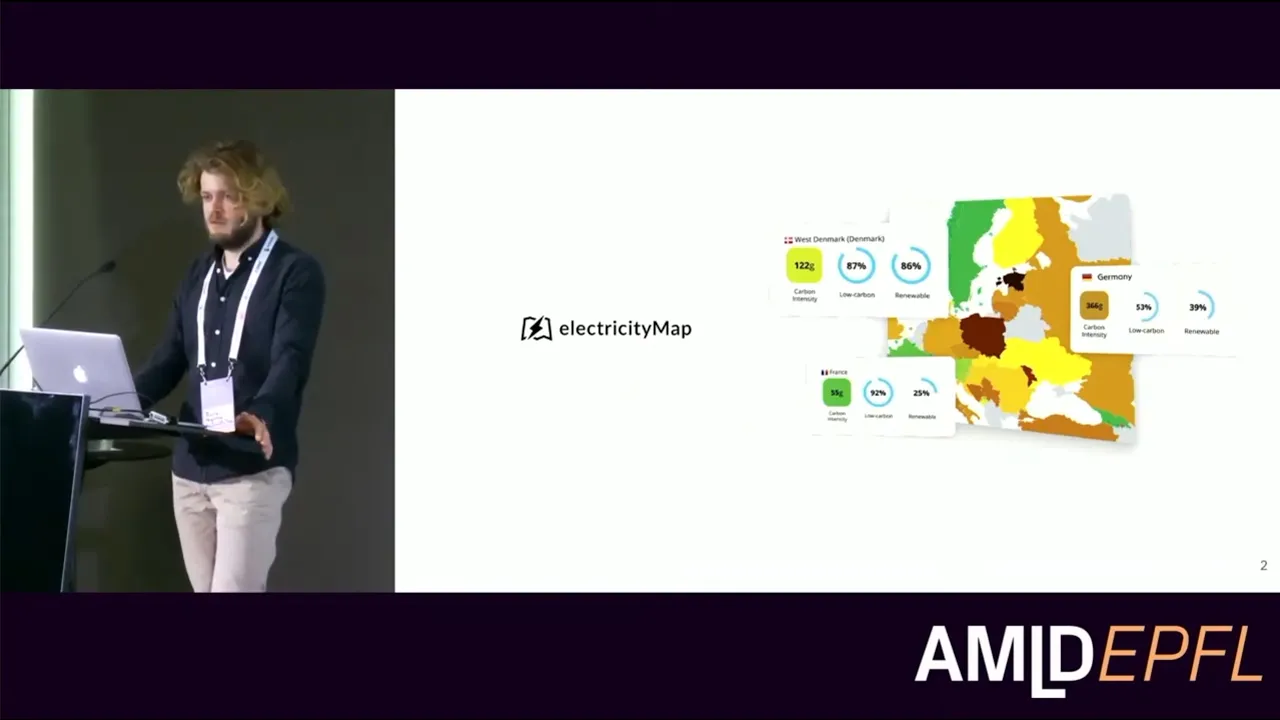
Electricity Maps data scientist Pierre Segonne explains how the company uses machine learning to track and reduce the carbon footprint of electricity grids - from real-time carbon accounting to demand-side response and forecasting the impact of new clean energy projects.
What we cover in this video
In this AMLD2022 talk, Pierre Segonne, data scientist at Electricity Maps, breaks down how machine learning supports the transition to a decarbonized electricity system.
He outlines a three-step "ladder" of use cases ranked by complexity:
granular carbon accounting, which fills gaps in real-time emissions data using periodicity-based models and powers tools used by Google and Microsoft to estimate hourly carbon intensity even in regions with limited data (including a case study on South Korea);
demand-side response, where 48-hour carbon intensity forecasts help shift electricity-heavy tasks, like Google's data center workloads or Windows updates
to greener hours; and long-term marginal emission factor modeling, an emerging approach to predicting where new renewable infrastructure, such as wind farms, would have the greatest decarbonization impact.
The talk offers a clear look at how applied machine learning turns electricity grid data into actionable climate decisions.

